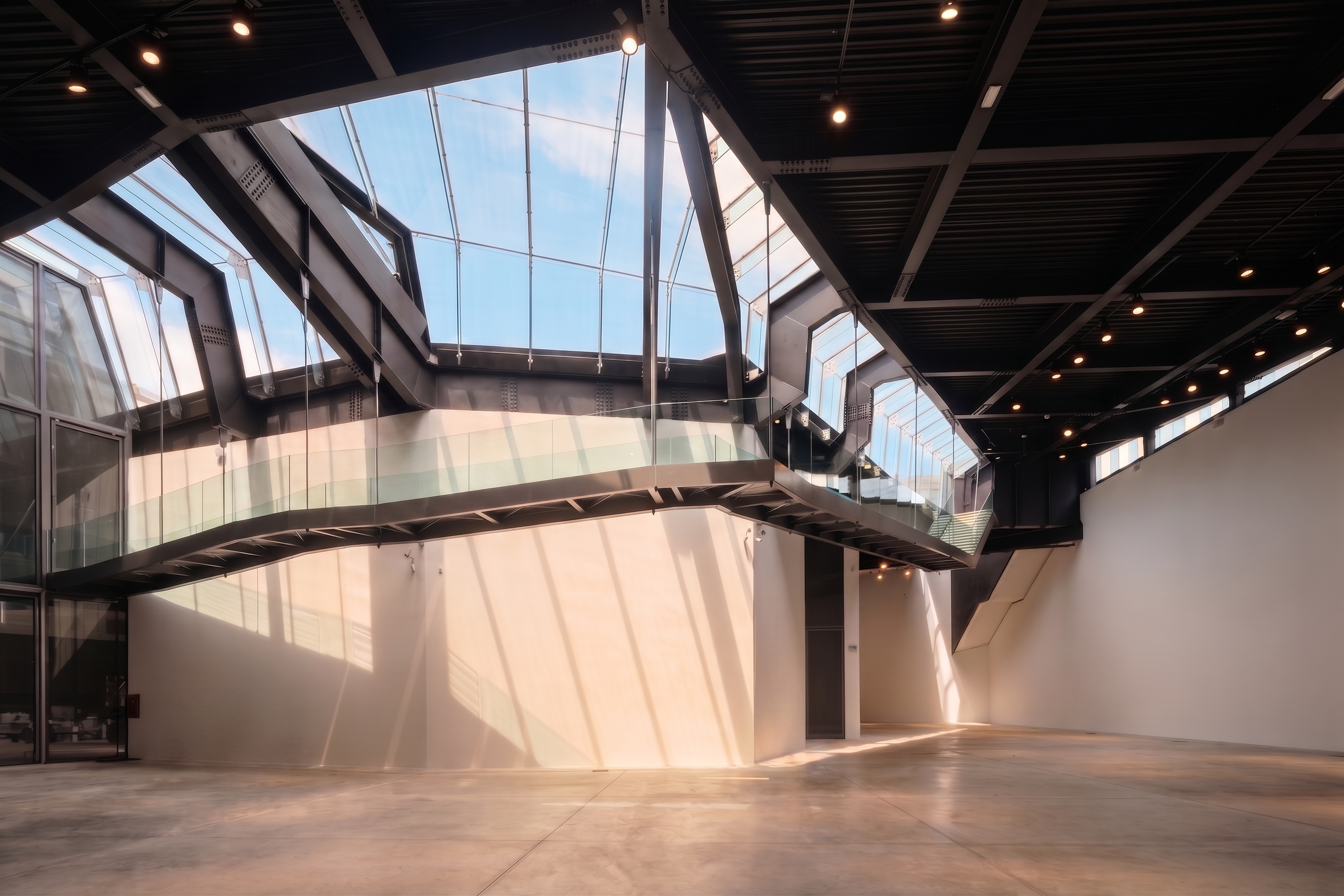
Staircases are a functional element, but they’re rarely just that. Within a home, a commercial space, or a building open to the public, they connect different levels and help define the character of the space.
Choosing between the different types of interior staircases therefore means considering available space, function, safety, materials, and design language.
Straight staircases: essential and versatile
The straight staircase is one of the most immediate solutions. Its linear design makes the route simple and legible, allowing for great freedom in choosing materials and defining the steps, structure, and railings.
It can be designed as a discreet element or become a more pronounced architectural presence. Wood, steel, and glasscan be combined to achieve a wide range of results, from warmer, more domestic environments to spaces with a contemporary, minimalist feel.
L- and U-shaped staircases: organizing the route
In L-shaped staircases, the change of direction occurs through a landing or a series of steps. U-shaped staircases, on the other hand, feature two flights that change direction.
They are suitable solutions when the spatial configuration requires a more complex layout. The landing can also serve as a pause and distribution element, helping to organize the relationship between the different levels of the building.
Spiral staircases: compact and recognizable
The spiral staircase develops around a central axis and connects two floors while occupying a limited space.
It is a common choice when space is limited, but it can also play a highly expressive role. The geometry, design of the steps, and the railing allow it to become a defining element of the interior design.
Comfort and ease of use, however, remain key aspects, especially when the staircase represents the main connection between floors.
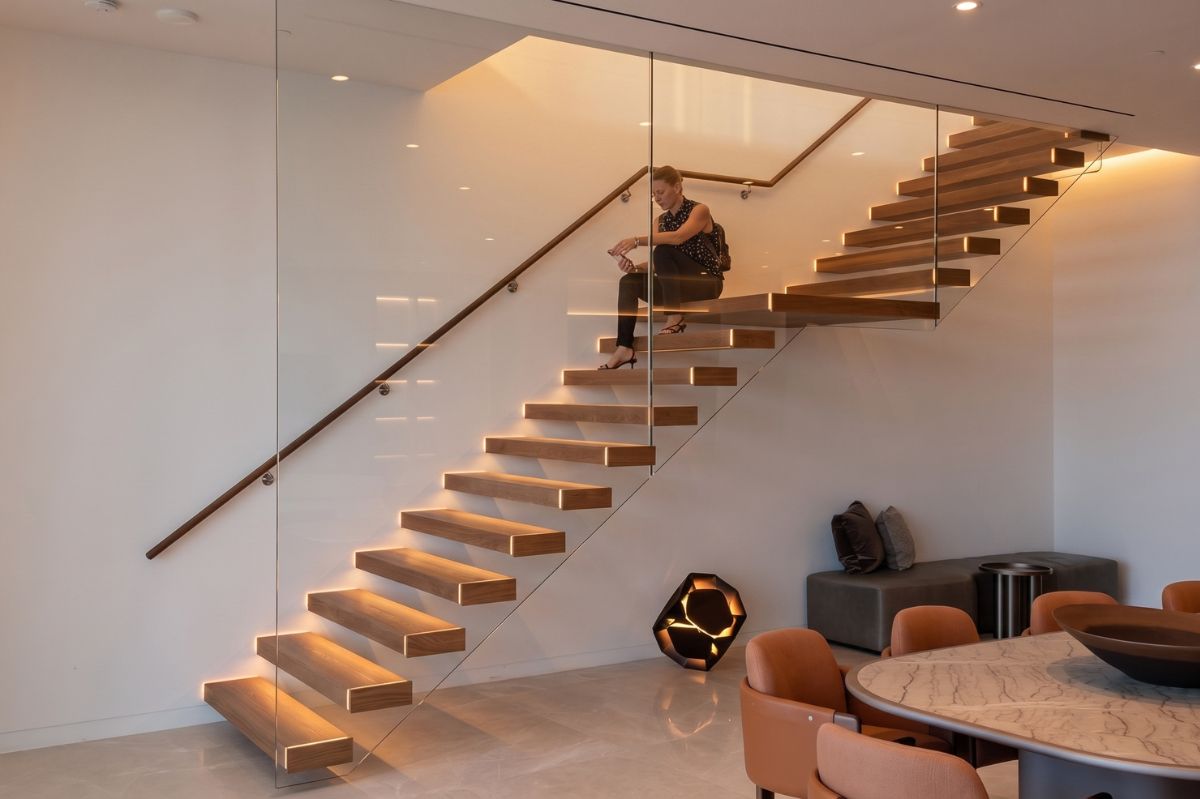
Suspended and cantilevered staircases: the quest for lightness
Among the most contemporary solutions are suspended and cantilevered staircases, in which the load-bearing structure is hidden or visually minimized.
The result is a greater perceptual lightness. The steps appear independent of the wall, and the use of glass for railings and protections helps maintain visual continuity and allow light to pass through.
Behind this apparent simplicity, however, lies a complex design and construction process, requiring attention to the structure, fastening systems, and the definition of every detail.
Stairs and railings: Soglianese Costruzioni’s approach
For Soglianese Costruzioni, glass staircases and railings are elements in which architecture, safety, and construction precision must coexist. The transparency of glass allows for the design of visually lightweight solutions, capable of integrating into spaces without weighing them down.
Soglianese’s experience in the use of glass allows for the development of custom solutions for stairs, railings, and protection systems, defining each element according to the project and the characteristics of the space. Structures, fixings, dimensions, and finishes are thus considered as parts of a single system, with the aim of achieving a coherent result from both an aesthetic and functional perspective.
Key points of the article
- The internal staircase is not simply a vertical connection, but can become a central element of the project.
- The main types include straight, L-shaped, U-shaped, spiral, suspended, and cantilevered staircases.
- The choice depends on available space, intended use, comfort, and architectural language.
- Glass, steel, and wood allow for the creation of very different design identities.
- Railings and fixing systems are an integral part of the staircase design.
- Soglianese Costruzioni designs custom staircases, railings, and glass solutions, combining safety, precision, and visual lightness.